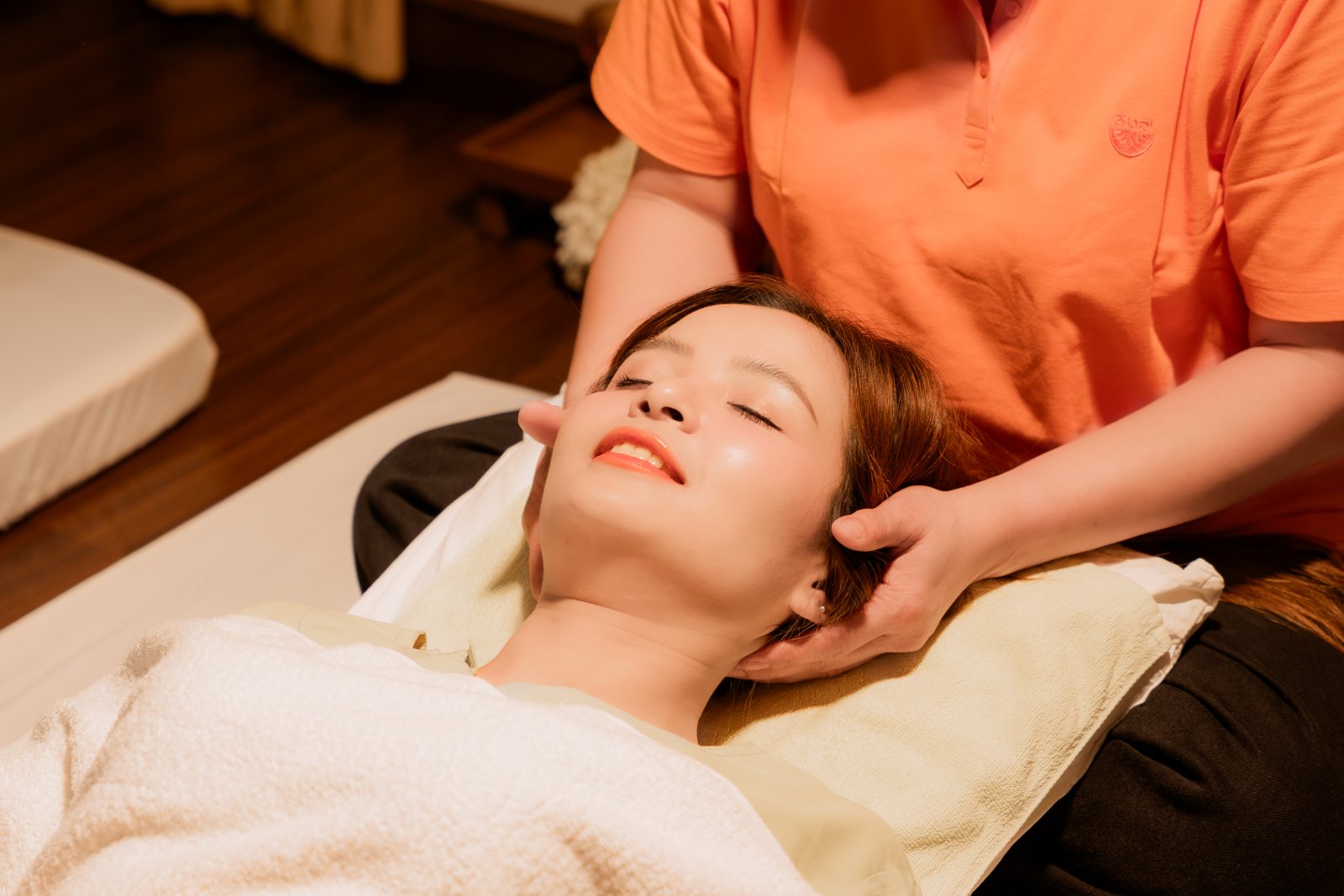

Why Guests Return: What Consistent Care Looks Like at Malatee
Malatee Thai Massage has welcomed guests in Bangkok since 2000, and our name comes from the Malatee jasmine, the most
A generation ago, chronic neck pain, persistent shoulder tension, and lower back problems were largely considered conditions of middle age. They were associated with decades of accumulated postural strain — the inevitable result of a long working life.
That picture has changed significantly.
Physiotherapists, sports medicine practitioners, and massage therapists across Thailand and globally are seeing the same shift: people in their late teens, twenties, and early thirties presenting with patterns of musculoskeletal tension that were previously uncommon until the forties and fifties.
Understanding why this is happening — and what it means for how young people should think about caring for their bodies — matters.
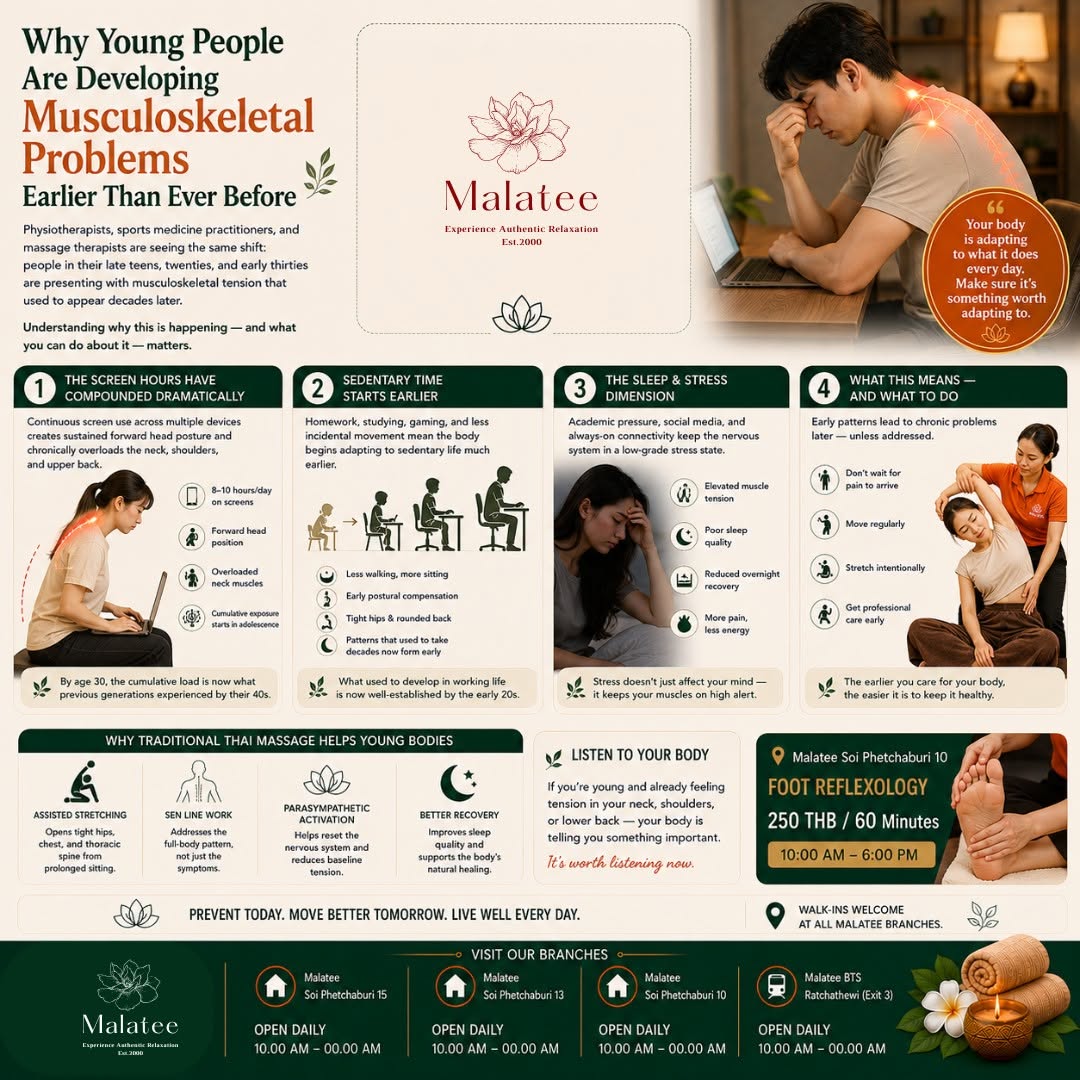
**The screen hours have compounded dramatically**
The most significant factor is one that’s easy to state but difficult to fully appreciate in its scale.
Young people today are not simply using screens more than previous generations. They are using screens almost continuously — from the moment they wake to the moment they sleep, across multiple devices, for study, work, entertainment, and social connection simultaneously.
A university student might spend eight to ten hours a day in a forward-flexed neck position — at a laptop for lectures and study, at a phone during breaks, at a tablet in the evening. A junior professional might add commute screen time to a full working-day screen load.
The cervical spine was not designed for this sustained load in forward flexion. The suboccipital muscles — already the most chronically overloaded group in desk workers — are beginning their loading pattern in adolescence rather than in a person’s thirties. The cumulative exposure by the time a young person reaches thirty is now equivalent to what a previous generation experienced by their mid-forties.
**Sedentary time starts earlier**
Previous generations of young people had significantly more incidental physical activity built into their daily lives — walking to and from school, physical education that was more substantial, fewer sedentary leisure activities. The transition from an active school day to a desk-based working life happened in the early twenties.
For today’s young people, many of whom have been doing substantial homework and exam preparation at desks since early secondary school, the accumulated sedentary hours begin much earlier. The hip flexor shortening, the thoracic spine rounding, and the postural compensation patterns that used to develop through working life are now well established before most young people enter the workforce.
**The sleep and stress dimension**
Academic pressure, social media, and the always-on connectivity of modern young life create a chronic low-grade sympathetic nervous system activation that compounds the physical effects of extended screen use.
The nervous system effects of sustained stress are not limited to subjective feelings of anxiety. They produce real, measurable physical changes: elevated baseline muscle tension, disrupted sleep architecture, reduced overnight recovery. A young person under sustained academic or professional stress is not simply feeling more anxious — their muscular system is physically carrying more tension, and recovering less effectively overnight, than their age would suggest.
**What this means — and what to do about it**
The patterns that develop in the late teens and twenties do not stay manageable indefinitely. They accumulate. The postural compensations that are relatively minor at twenty-five become the chronic pain conditions of thirty-five if they are not addressed.
The earlier active intervention begins, the easier it is.
Traditional Thai Massage is particularly well suited to young bodies dealing with screen-based postural tension. The assisted stretching component directly addresses the hip flexor and thoracic spine shortening that sustained sitting creates. The Sen line work addresses the full-body pattern — not just the symptomatic areas. The parasympathetic shift addresses the nervous system dimension that stress and poor sleep compound.
At Malatee, we see a growing number of clients in their twenties and early thirties. We don’t wait for pain to arrive before working with them. The most effective care is the kind that starts before the problem becomes chronic.
If you’re young and you’re already feeling it in your neck, your shoulders, or your lower back — your body is telling you something important. It’s worth listening now.
Walk-ins welcome at all Malatee branches.
ทำไมคนรุ่นใหม่ถึงพัฒนาปัญหาระบบกล้ามเนื้อและกระดูกเร็วกว่าที่เคยเป็นมา
รุ่นก่อนหน้า อาการปวดคอเรื้อรัง ความตึงบ่าต่อเนื่อง และปัญหาหลังส่วนล่างถูกมองว่าเป็นภาวะของวัยกลางคนเป็นหลัก มันเกี่ยวข้องกับความเครียดท่าทางที่สะสมมาหลายทศวรรษ ผลที่หลีกเลี่ยงไม่ได้จากชีวิตการทำงานที่ยาวนาน
ภาพนั้นเปลี่ยนไปอย่างมีนัยสำคัญแล้ว
นักกายภาพบำบัด ผู้ปฏิบัติเวชศาสตร์การกีฬา และหมอนวดทั่วไทยและทั่วโลกเห็นการเปลี่ยนแปลงแบบเดียวกัน: ผู้คนในช่วงปลายวัยรุ่น ยี่สิบต้นๆ และต้นสามสิบที่มีรูปแบบความตึงของระบบกล้ามเนื้อและกระดูกที่ก่อนหน้านี้ไม่ค่อยพบจนถึงสี่สิบและห้าสิบ
 ชั่วโมงหน้าจอสะสมอย่างมหาศาล
คนรุ่นใหม่ในปัจจุบันไม่ได้แค่ใช้หน้าจอมากกว่ารุ่นก่อน พวกเขาใช้หน้าจอแทบต่อเนื่อง — ตั้งแต่ตื่นจนนอน ผ่านอุปกรณ์หลายชิ้น สำหรับการเรียน งาน ความบันเทิง และการเชื่อมต่อทางสังคมพร้อมกัน
นักศึกษาอาจใช้เวลาแปดถึงสิบชั่วโมงต่อวันในท่าคอก้มไปข้างหน้า กระดูกสันหลังส่วนคอไม่ได้ถูกออกแบบมาสำหรับภาระต่อเนื่องนี้ในการก้ม กล้ามเนื้อ Suboccipital เริ่มรูปแบบการโหลดในวัยรุ่นแทนที่จะเป็นช่วงสามสิบ การสัมผัสสะสมเมื่อถึงอายุสามสิบตอนนี้เทียบเท่ากับสิ่งที่รุ่นก่อนประสบเมื่ออายุกลางสี่สิบ
เวลานั่งนิ่งเริ่มต้นเร็วกว่า
คนรุ่นก่อนมีกิจกรรมทางกายโดยบังเอิญมากกว่าในชีวิตประจำวัน การเปลี่ยนจากวันเรียนที่กระตือรือร้นไปสู่ชีวิตการทำงานที่โต๊ะเกิดขึ้นในช่วงต้นยี่สิบ
สำหรับคนรุ่นใหม่ในปัจจุบัน รูปแบบการยึดท่าทางที่เคยพัฒนาผ่านชีวิตการทำงานตอนนี้ตั้งตัวดีก่อนที่คนรุ่นใหม่ส่วนใหญ่จะเข้าสู่ตลาดแรงงาน
มิติการนอนหลับและความเครียด
ความกดดันทางวิชาการ โซเชียลมีเดีย และการเชื่อมต่อตลอดเวลาของชีวิตคนรุ่นใหม่สมัยใหม่สร้างการกระตุ้นระบบประสาทซิมพาเทติกระดับต่ำเรื้อรังที่ทบกับผลกระทบทางกายภาพของการใช้หน้าจอยาวนาน คนรุ่นใหม่ที่อยู่ภายใต้ความเครียดทางวิชาการหรืออาชีพอย่างต่อเนื่องไม่ได้แค่รู้สึกวิตกกังวลมากขึ้น ระบบกล้ามเนื้อของพวกเขาแบกรับความตึงมากขึ้นทางกายภาพ และฟื้นตัวได้น้อยลงในข้ามคืน มากกว่าที่อายุของพวกเขาจะบอก
สิ่งนี้หมายความว่าอะไร — และจะทำอะไรกับมัน
รูปแบบที่พัฒนาในช่วงวัยรุ่นตอนปลายและยี่สิบปีไม่ได้จัดการได้ตลอดไป พวกมันสะสม การชดเชยท่าทางที่ค่อนข้างเล็กน้อยเมื่ออายุยี่สิบห้ากลายเป็นภาวะปวดเรื้อรังของสามสิบห้าถ้าไม่ได้รับการจัดการ
ยิ่งเริ่มการแทรกแซงที่กระตือรือร้นเร็วเท่าไหร่ ยิ่งง่ายขึ้นเท่านั้น
ถ้าคุณยังหนุ่มสาวและรู้สึกมันที่คอ บ่า หรือหลังส่วนล่างอยู่แล้ว ร่างกายบอกบางอย่างสำคัญ ควรฟังตอนนี้
ไม่ต้องนัด Walk-in ยินดีต้อนรับทุกสาขา
为什么年轻人正在比以往更早出现肌肉骨骼问题
在上一代人看来,慢性颈痛、持续性肩膀紧张和下背部问题,主要被视为中年才会出现的状况——是数十年姿态劳损积累的结果,漫长职业生涯的必然产物。
这幅图景已经发生了显著变化。
泰国和全球的物理治疗师、运动医学从业者和按摩师都看到了同样的转变:青少年晚期、二十多岁和三十出头的人群,正在出现以往直到四五十岁才常见的肌肉骨骼紧张模式。
屏幕时间的积累已经急剧增加
今天的年轻人不只是比上一代用更多屏幕,他们几乎持续不断地使用屏幕——从醒来到入睡,跨越多个设备,同时用于学习、工作、娱乐和社交。
一名大学生每天可能在颈部前屈姿势下度过八到十个小时。颈椎并非为这种持续的前屈负荷而设计。枕下肌群在青少年时期就开始其负荷模式,而非三十岁。到了三十岁时的累积暴露量,现在已相当于上一代人四十五岁左右所经历的。
久坐时间更早开始
上一代年轻人的日常生活中有更多偶发性体力活动。从活跃的校园生活过渡到伏案工作发生在二十岁出头。
对今天的年轻人来说,姿态代偿模式在大多数年轻人进入职场之前就已经牢固建立了。
睡眠与压力维度
学业压力、社交媒体和现代年轻人生活的全时连接,制造了一种慢性低强度的交感神经激活,与长时间使用屏幕的物理影响叠加。长期处于压力下的年轻人不只是感到更焦虑——他们的肌肉系统在物理上承载着更多紧张,夜间恢复效率也低于其年龄应有的水平。
这意味着什么,以及该怎么做
青少年晚期和二十多岁形成的模式,不会无限期地维持可控状态。它们在积累。二十五岁时相对轻微的姿态代偿,如果不加处理,将成为三十五岁时的慢性疼痛。
主动干预越早开始越容易。
如果你还年轻,颈部、肩膀或下背部已经有感觉——你的身体在告诉你一些重要的事,现在就值得认真对待。
欢迎直接前往 Malatee 任意门店,无需预约。
Experience Authentic Relaxation | Est. 2000
Visit Our Branches:
• Malatee Soi Phetchaburi 15
• Malatee Soi Phetchaburi 13
• Malatee Soi Phetchaburi 10
• Malatee BTS Ratchathewi (Exit 3)
#MalateeThaiMassage#มาลาตีนวดไทย#YoungAndTight#คนรุ่นใหม่กับกล้ามเนื้อ#ThaiMassageBangkok#นวดแผนไทย#OfficeSyndrome#ออฟฟิศซินโดรม#WellnessBangkok#BangkokMassage#นวดเพื่อสุขภาพ#ถนนเพชรบุรี#ScreenTime#PostureHealth
Lorem Ipsum is simply dummy text of the printing and typesetting industry