
Why Guests Return: What Consistent Care Looks Like at Malatee
Malatee Thai Massage has welcomed guests in Bangkok since 2000, and our name comes from the Malatee jasmine, the most
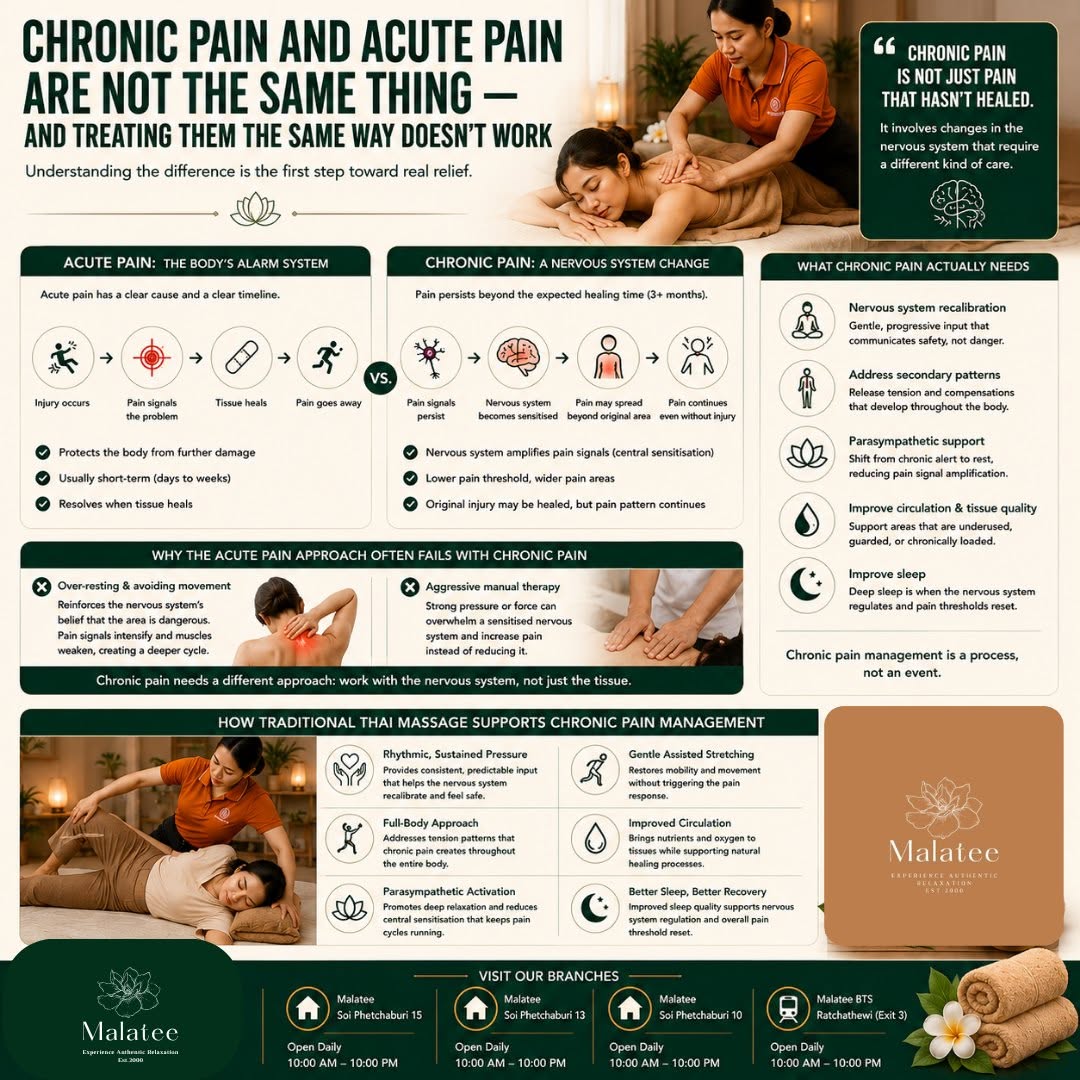
Most people’s understanding of pain is shaped by their experience of acute pain — the kind that arrives suddenly, has a clear cause, and resolves when the cause is addressed. You twist an ankle. It hurts. You rest it, ice it, and in a few days the pain is gone because the tissue has healed.
This model — injury causes pain, healing resolves pain — is accurate for acute conditions. But it leads people seriously astray when they apply it to chronic pain.
Chronic pain doesn’t follow the same rules. And the approach that resolves acute pain often fails to address chronic pain — and can sometimes make it worse.
**What makes pain chronic**
Chronic pain is generally defined as pain that persists beyond the expected healing time — typically three months or more. But this definition understates what’s actually happening in the body.
Chronic pain is not simply acute pain that hasn’t healed yet. It involves changes in the nervous system itself — a phenomenon called central sensitisation — in which the pain-processing pathways become more sensitive over time. The nervous system, exposed to persistent pain signals, begins to amplify those signals. The threshold for what triggers pain decreases. The area of the body that perceives pain can expand beyond the original site of tissue damage.
In many chronic pain conditions, the original tissue injury has long since healed. But the nervous system has learned a pattern of pain — and continues to generate that experience even without ongoing tissue damage.
This is not imaginary. It is a well-documented physiological change. And it requires a different kind of intervention than tissue repair.
**Why the acute pain approach fails with chronic pain**
The acute pain response — rest, reduce load, protect the area — is appropriate when tissue is actively damaged and healing. But applied to chronic pain, it often has the opposite effect.
Avoidance of movement reinforces the nervous system’s assessment that the area is dangerous. The pain signals intensify. Muscles that have been guarded and underused develop secondary tension patterns throughout the rest of the body. The cycle deepens.
Aggressive manual therapy — attempting to “fix” chronic pain through intense pressure or manipulation — can also backfire. When the nervous system is already sensitised, strong mechanical input can amplify rather than reduce the pain experience.
**What chronic pain actually needs**
Effective management of chronic pain requires working with the nervous system, not just the tissue.
This means:
 Gradual, progressive input that helps the nervous system recalibrate its threat assessment — gentle, sustained work that communicates safety rather than danger
Addressing the secondary tension patterns that have developed throughout the body in response to pain and guarding
Supporting the parasympathetic nervous system — shifting the body from a state of chronic alert toward rest, which directly reduces the nervous system’s amplification of pain signals
Improving circulation and tissue quality in areas that have been underused, guarded, or chronically loaded
Improving sleep — which is where nervous system regulation and pain threshold recalibration largely occur
**Where massage fits in chronic pain management**
Traditional Thai Massage — at an appropriate pressure, with a full-body approach — is particularly well suited to the chronic pain context.
The rhythmic, sustained nature of Thai massage provides the nervous system with consistent, predictable input — the kind that facilitates recalibration rather than provoking guarding. The full-body approach addresses the secondary tension patterns that chronic pain creates throughout the body. The parasympathetic shift that a good massage session produces directly counteracts the central sensitisation that keeps chronic pain cycles running.
This is not a cure. Chronic pain management is a process, not an event. But for people living with chronic pain conditions — back pain, neck pain, tension headaches, fibromyalgia, or the accumulated effects of years of musculoskeletal stress — regular massage as part of a broader management approach can meaningfully improve the quality of daily life.
At Malatee, our therapists are trained to read the individual — to understand what each body needs, to adjust pressure and approach for someone managing chronic pain, and to provide the kind of consistent, progressive care that chronic conditions require.
If you’ve been living with chronic pain and haven’t found an approach that works — this is worth exploring.
 Walk-ins welcome at all Malatee branches.
ความเจ็บปวดเรื้อรังและความเจ็บปวดเฉียบพลันไม่ใช่สิ่งเดียวกัน — และการรักษาแบบเดียวกันใช้ไม่ได้
ความเข้าใจเรื่องความเจ็บปวดของคนส่วนใหญ่ถูกกำหนดโดยประสบการณ์ของความเจ็บปวดเฉียบพลัน — ชนิดที่มาถึงฉับพลัน มีสาเหตุที่ชัดเจน และหายเมื่อสาเหตุได้รับการจัดการ คุณบิดข้อเท้า มันเจ็บ คุณพักมัน ประคบเย็น และในไม่กี่วันความเจ็บปวดก็หายเพราะเนื้อเยื่อหาย
โมเดลนี้ — การบาดเจ็บทำให้เจ็บ การรักษาแก้ความเจ็บ — ถูกต้องสำหรับอาการเฉียบพลัน แต่มันนำคนหลงทางอย่างจริงจังเมื่อพวกเขาใช้มันกับความเจ็บปวดเรื้อรัง
ความเจ็บปวดเรื้อรังไม่ได้ตามกฎเดียวกัน และแนวทางที่แก้ความเจ็บปวดเฉียบพลันมักล้มเหลวในการจัดการความเจ็บปวดเรื้อรัง — และบางครั้งอาจทำให้แย่ลง
อะไรทำให้ความเจ็บปวดเรื้อรัง
ความเจ็บปวดเรื้อรังโดยทั่วไปนิยามว่าเป็นความเจ็บปวดที่คงอยู่เกินเวลาการรักษาที่คาดหวัง — โดยทั่วไปสามเดือนหรือมากกว่า แต่นิยามนี้ประเมินต่ำกว่าสิ่งที่เกิดขึ้นจริงในร่างกาย
ความเจ็บปวดเรื้อรังไม่ใช่แค่ความเจ็บปวดเฉียบพลันที่ยังไม่หาย มันเกี่ยวข้องกับการเปลี่ยนแปลงในระบบประสาทเอง — ปรากฏการณ์ที่เรียกว่า Central Sensitisation — ซึ่งเส้นทางการประมวลผลความเจ็บปวดกลายเป็นไวมากขึ้นตามเวลา ระบบประสาทที่สัมผัสกับสัญญาณความเจ็บปวดอย่างต่อเนื่องเริ่มขยายสัญญาณเหล่านั้น เกณฑ์สำหรับสิ่งที่กระตุ้นความเจ็บปวดลดลง บริเวณของร่างกายที่รับรู้ความเจ็บปวดสามารถขยายออกไปนอกจุดเดิมของความเสียหายของเนื้อเยื่อ
ในหลายสภาวะความเจ็บปวดเรื้อรัง การบาดเจ็บของเนื้อเยื่อเดิมหายนานแล้ว แต่ระบบประสาทได้เรียนรู้รูปแบบความเจ็บปวด — และยังคงสร้างประสบการณ์นั้นแม้ไม่มีความเสียหายของเนื้อเยื่อที่ดำเนินอยู่
นี่ไม่ใช่จินตนาการ มันเป็นการเปลี่ยนแปลงทางสรีรวิทยาที่ได้รับการบันทึกไว้เป็นอย่างดี และมันต้องการการแทรกแซงที่แตกต่างจากการซ่อมแซมเนื้อเยื่อ
ทำไมแนวทางความเจ็บปวดเฉียบพลันถึงล้มเหลวกับความเจ็บปวดเรื้อรัง
การตอบสนองต่อความเจ็บปวดเฉียบพลัน — พัก ลดภาระ ปกป้องบริเวณ — เหมาะสมเมื่อเนื้อเยื่อเสียหายและรักษาอยู่ แต่เมื่อใช้กับความเจ็บปวดเรื้อรัง มักมีผลตรงกันข้าม
การหลีกเลี่ยงการเคลื่อนไหวเสริมการประเมินของระบบประสาทว่าบริเวณนั้นอันตราย สัญญาณความเจ็บปวดเข้มข้นขึ้น กล้ามเนื้อที่ได้รับการปกป้องและใช้งานน้อยพัฒนารูปแบบความตึงทุติยภูมิทั่วร่างกายที่เหลือ วงจรลึกขึ้น
การบำบัดด้วยมือที่รุนแรง — พยายาม “แก้ไข” ความเจ็บปวดเรื้อรังผ่านแรงกดหรือการจัดกระดูกอย่างเข้มข้น — ก็อาจให้ผลกลับกัน เมื่อระบบประสาทถูกทำให้ไวมากขึ้นแล้ว การรับสัญญาณทางกลที่แรงอาจขยายแทนที่จะลดประสบการณ์ความเจ็บปวด
ความเจ็บปวดเรื้อรังต้องการอะไรจริงๆ
การจัดการความเจ็บปวดเรื้อรังที่มีประสิทธิผลต้องการการทำงานกับระบบประสาท ไม่ใช่แค่เนื้อเยื่อ
ซึ่งหมายความว่า:
การรับสัญญาณที่ค่อยเป็นค่อยไปและก้าวหน้าที่ช่วยให้ระบบประสาทปรับเทียบการประเมินภัยคุกคาม — การทำงานที่นุ่มนวลและต่อเนื่องที่สื่อสารความปลอดภัยแทนที่จะเป็นอันตราย
การจัดการรูปแบบความตึงทุติยภูมิที่พัฒนาขึ้นทั่วร่างกายในการตอบสนองต่อความเจ็บปวดและการปกป้อง
การสนับสนุนระบบประสาทพาราซิมพาเทติก — เปลี่ยนร่างกายจากสภาวะตื่นตัวเรื้อรังสู่การพักผ่อน ซึ่งลดการขยายสัญญาณความเจ็บปวดของระบบประสาทโดยตรง
การปรับปรุงการไหลเวียนและคุณภาพเนื้อเยื่อในบริเวณที่ใช้งานน้อย ได้รับการปกป้อง หรือโหลดเรื้อรัง
การปรับปรุงการนอนหลับ — ซึ่งเป็นที่ที่การควบคุมระบบประสาทและการปรับเทียบเกณฑ์ความเจ็บปวดส่วนใหญ่เกิดขึ้น
การนวดเหมาะสมอย่างไรในการจัดการความเจ็บปวดเรื้อรัง
การนวดแผนไทย — ในแรงกดที่เหมาะสม ด้วยแนวทางทั้งร่างกาย — เหมาะอย่างยิ่งกับบริบทความเจ็บปวดเรื้อรัง
ลักษณะจังหวะและต่อเนื่องของการนวดแผนไทยให้ระบบประสาทรับสัญญาณที่สม่ำเสมอและคาดเดาได้ — ชนิดที่ช่วยให้การปรับเทียบเกิดขึ้นแทนที่จะกระตุ้นการปกป้อง แนวทางทั้งร่างกายจัดการรูปแบบความตึงทุติยภูมิที่ความเจ็บปวดเรื้อรังสร้างทั่วร่างกาย การเปลี่ยนแปลงของพาราซิมพาเทติกที่การนวดที่ดีสร้างต่อต้าน Central Sensitisation ที่ทำให้วงจรความเจ็บปวดเรื้อรังดำเนินต่อโดยตรง
นี่ไม่ใช่การรักษา การจัดการความเจ็บปวดเรื้อรังเป็นกระบวนการ ไม่ใช่เหตุการณ์เดียว แต่สำหรับคนที่ใช้ชีวิตกับสภาวะความเจ็บปวดเรื้อรัง — ปวดหลัง ปวดคอ ปวดหัวตึง ไฟโบรไมอัลเจีย หรือผลสะสมของหลายปีของความเครียดระบบกล้ามเนื้อและกระดูก — การนวดสม่ำเสมอเป็นส่วนหนึ่งของแนวทางการจัดการที่กว้างขึ้นสามารถปรับปรุงคุณภาพชีวิตประจำวันได้อย่างมีความหมาย
ที่มาลาตี หมอนวดของเราได้รับการฝึกให้อ่านแต่ละบุคคล — เพื่อเข้าใจสิ่งที่ร่างกายแต่ละคนต้องการ ปรับแรงกดและแนวทางสำหรับผู้ที่จัดการความเจ็บปวดเรื้อรัง และให้การดูแลที่สม่ำเสมอและก้าวหน้าที่สภาวะเรื้อรังต้องการ
ถ้าคุณใช้ชีวิตกับความเจ็บปวดเรื้อรังและยังไม่พบแนวทางที่ได้ผล — สิ่งนี้ควรค่าแก่การสำรวจ
ไม่ต้องนัด Walk-in ยินดีต้อนรับทุกสาขา
慢性疼痛与急性疼痛不是同一回事——用同样的方式处理它们,行不通。
大多数人对疼痛的理解,是由急性疼痛的体验塑造的——那种突然出现、有明确原因、原因解决后即消失的疼痛。你扭了脚踝,很痛,休息、冰敷,几天后随着组织愈合,疼痛消失了。
这个模型——损伤引发疼痛,愈合解除疼痛——对急性疾病是准确的。但当人们将其应用于慢性疼痛时,却会严重迷失方向。
慢性疼痛不遵循同样的规律。解决急性疼痛的方法,往往无法处理慢性疼痛——有时甚至会让情况更糟。
是什么让疼痛变成慢性的
慢性疼痛通常被定义为超出预期愈合时间后仍持续存在的疼痛——一般为三个月或更长。但这个定义低估了身体内部真正发生的事情。
慢性疼痛不只是尚未痊愈的急性疼痛。它涉及神经系统本身的变化——一种称为”中枢敏化”的现象——疼痛处理通路随时间变得越来越敏感。暴露于持续疼痛信号的神经系统开始放大这些信号。触发疼痛的阈值降低。感知疼痛的身体区域可能扩展至原始组织损伤部位之外。
在许多慢性疼痛状态下,原始组织损伤早已痊愈。但神经系统已经学会了一种疼痛模式——即使没有持续的组织损伤,也会继续产生这种体验。
这不是想象出来的。这是有充分记录的生理变化,需要与组织修复截然不同的干预方式。
为什么急性疼痛的处理方式对慢性疼痛失效
急性疼痛的应对方式——休息、减少负荷、保护患处——在组织主动受损和愈合时是合适的。但用于慢性疼痛时,往往产生相反的效果。
回避运动强化了神经系统认为该区域”危险”的评估。疼痛信号随之加剧。被保护和使用不足的肌肉在全身其他部位形成继发性紧张模式。这个循环不断深化。
激进的手法治疗——试图通过强烈的按压或推拿来”修复”慢性疼痛——也可能适得其反。当神经系统已处于高度敏化状态时,强烈的机械刺激可能会放大而非减轻疼痛体验。
慢性疼痛真正需要什么
有效管理慢性疼痛,需要与神经系统合作,而不只是与组织合作。
这意味着:
逐渐、渐进式的刺激输入,帮助神经系统重新校准其威胁评估——温和、持续的工作,传达安全感而非危险感
处理因疼痛和保护性动作而在全身形成的继发性紧张模式
支持副交感神经系统——将身体从慢性警觉状态转向休息,直接减少神经系统对疼痛信号的放大
改善被少用、被保护或长期过载区域的血液循环和组织质量
改善睡眠——神经系统调节和疼痛阈值重新校准,很大程度上就发生在睡眠中
按摩在慢性疼痛管理中的位置
泰式传统按摩——以适当的力度、采用全身性方式——尤其适合慢性疼痛的情境。
泰式按摩有节奏、持续的特性,为神经系统提供一致、可预测的刺激输入——这种输入有助于重新校准,而非触发防御性紧张。全身性方式处理慢性疼痛在全身造成的继发性紧张模式。一次好的按摩所产生的副交感神经转换,直接对抗维持慢性疼痛循环的中枢敏化。
这不是治愈。慢性疼痛管理是一个过程,而非一次性事件。但对于与慢性疼痛共存的人——背痛、颈痛、紧张性头痛、纤维肌痛,或多年肌肉骨骼压力积累的影响——将定期按摩作为更广泛管理方案的一部分,能够有意义地改善日常生活质量。
在 Malatee,我们的按摩师经过培训,能够读懂每一个个体——理解每个身体的需求,为管理慢性疼痛的客人调整力度和方式,提供慢性疾病所需的那种持续、渐进的照护。
如果你一直带着慢性疼痛生活,却还没找到有效的方法——这值得探索。
欢迎直接前往 Malatee 任意门店,无需预约。
 Experience Authentic Relaxation | Est. 2000
 Visit Our Branches:
• Malatee Soi Phetchaburi 15
• Malatee Soi Phetchaburi 13
• Malatee Soi Phetchaburi 10
• Malatee BTS Ratchathewi (Exit 3)
#MalateeThaiMassage#มาลาตีนวดไทย#ChronicPain#ปวดเรื้อรัง#ThaiMassageBangkok#นวดแผนไทย#PainManagement#WellnessBangkok#BangkokMassage#นวดเพื่อสุขภาพ#ถนนเพชรบุรี#CentralSensitisation#MassageTherapy#ChronicPainRelief
Lorem Ipsum is simply dummy text of the printing and typesetting industry