
Why Guests Return: What Consistent Care Looks Like at Malatee
Malatee Thai Massage has welcomed guests in Bangkok since 2000, and our name comes from the Malatee jasmine, the most
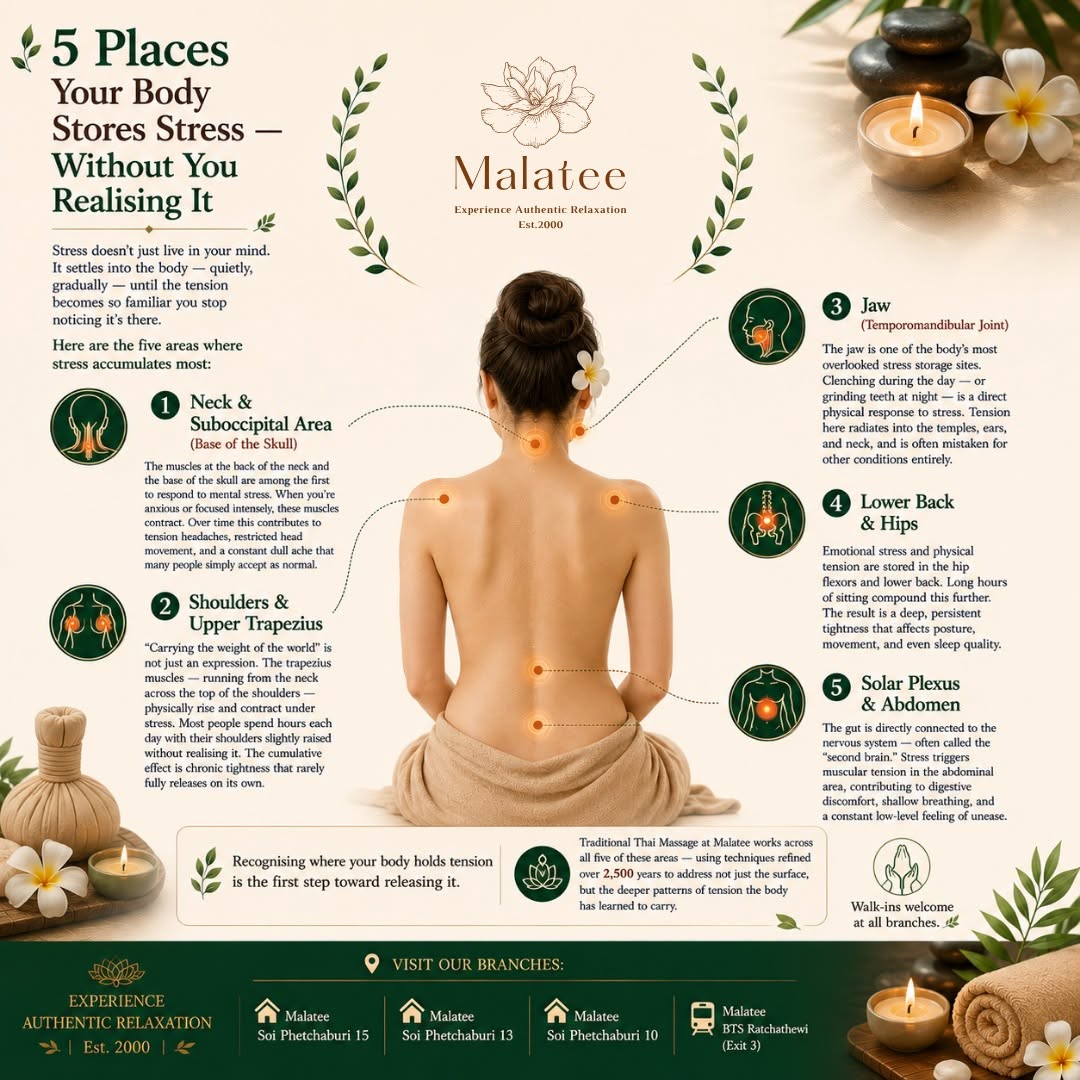
Stress doesn’t just live in your mind. It settles into the body — quietly, gradually — until the tension becomes so familiar you stop noticing it’s there.
Here are the five areas where stress accumulates most:
 1. Neck & Suboccipital Area (Base of the Skull)
The muscles at the back of the neck and the base of the skull are among the first to respond to mental stress. When you’re anxious or focused intensely, these muscles contract. Over time this contributes to tension headaches, restricted head movement, and a constant dull ache that many people simply accept as normal.
2. Shoulders & Upper Trapezius
“Carrying the weight of the world” is not just an expression. The trapezius muscles — running from the neck across the top of the shoulders — physically rise and contract under stress. Most people spend hours each day with their shoulders slightly raised without realising it. The cumulative effect is chronic tightness that rarely fully releases on its own.
3. Jaw (Temporomandibular Joint)
The jaw is one of the body’s most overlooked stress storage sites. Clenching during the day — or grinding teeth at night — is a direct physical response to stress. Tension here radiates into the temples, ears, and neck, and is often mistaken for other conditions entirely.
4. Lower Back & Hips
Emotional stress and physical tension are stored in the hip flexors and lower back. Long hours of sitting compound this further. The result is a deep, persistent tightness that affects posture, movement, and even sleep quality.
5. Solar Plexus & Abdomen
The gut is directly connected to the nervous system — often called the “second brain.” Stress triggers muscular tension in the abdominal area, contributing to digestive discomfort, shallow breathing, and a constant low-level feeling of unease.
Recognising where your body holds tension is the first step toward releasing it.
Traditional Thai Massage at Malatee works across all five of these areas — using techniques refined over 2,500 years to address not just the surface, but the deeper patterns of tension the body has learned to carry.
 Walk-ins welcome at all branches.
 5 จุดในร่างกายที่เก็บความเครียด — โดยที่คุณอาจไม่รู้ตัว
ความเครียดไม่ได้อยู่แค่ในใจ มันตกตะกอนลงในร่างกาย อย่างเงียบๆ และค่อยเป็นค่อยไป จนความตึงนั้นกลายเป็นเรื่องคุ้นชินจนหยุดสังเกตว่ามันอยู่ที่นั่น
นี่คือ 5 จุดที่ความเครียดสะสมมากที่สุด
1. คอและฐานกะโหลกศีรษะ
กล้ามเนื้อด้านหลังคอและฐานกะโหลกเป็นกลุ่มแรกที่ตอบสนองต่อความเครียดทางจิตใจ เมื่อวิตกกังวลหรือโฟกัสหนัก กล้ามเนื้อกลุ่มนี้จะหดตัว สะสมจนกลายเป็นอาการปวดหัวตึง การหมุนคอที่ติดขัด และความเมื่อยล้าที่หลายคนคิดว่าเป็นเรื่องปกติ
2. บ่าและกล้ามเนื้อ Trapezius ส่วนบน
“แบกโลกทั้งใบ” ไม่ใช่แค่สำนวน — กล้ามเนื้อ Trapezius ที่ทอดจากคอไปถึงบ่า จะยกตัวและหดเกร็งเมื่อเครียด คนส่วนใหญ่ยกบ่าขึ้นเล็กน้อยอยู่ตลอดเวลาโดยไม่รู้ตัว ผลสะสมคือความตึงเรื้อรังที่แทบไม่มีวันคลายออกเองได้
3. กราม (ข้อต่อขากรรไกร)
กรามคือหนึ่งในจุดเก็บความเครียดที่ถูกมองข้ามมากที่สุด การกัดฟันระหว่างวัน หรือนอนกัดฟันตอนกลางคืน คือการตอบสนองทางกายภาพต่อความเครียดโดยตรง ความตึงตรงนี้แผ่ไปถึงขมับ หู และคอ และมักถูกเข้าใจผิดว่าเป็นอาการอื่น
4. หลังส่วนล่างและสะโพก
ความเครียดทั้งทางอารมณ์และร่างกายสะสมที่กล้ามเนื้อสะโพกและหลังส่วนล่าง การนั่งนานๆ ยิ่งทำให้หนักขึ้น ผลลัพธ์คือความตึงลึกๆ ที่ส่งผลต่อท่าทาง การเคลื่อนไหว และแม้กระทั่งคุณภาพการนอน
5. Solar Plexus และช่องท้อง
ลำไส้เชื่อมต่อโดยตรงกับระบบประสาท — มักถูกเรียกว่า “สมองที่สอง” ความเครียดทำให้กล้ามเนื้อในช่องท้องตึง ส่งผลต่อระบบย่อยอาหาร การหายใจตื้น และความรู้สึกไม่สบายตัวเรื้อรังที่ไม่รู้สาเหตุ
การรู้จักจุดที่ร่างกายเก็บความตึงไว้คือก้าวแรกสู่การคลายมันออก
การนวดแผนไทยที่มาลาตีทำงานครอบคลุมทั้ง 5 จุดนี้ — ด้วยเทคนิคที่ขัดเกลามากว่า 2,500 ปี เพื่อแก้ไขไม่ใช่แค่ผิวเผิน แต่รูปแบบความตึงที่ลึกกว่าที่ร่างกายเรียนรู้มาที่จะแบกรับ
ไม่ต้องนัด Walk-in ยินดีต้อนรับทุกสาขา
身体储存压力的5个部位——你可能从未意识到
压力不只存在于大脑。它悄悄地、逐渐地沉积在身体里——直到那种紧绷感变得如此熟悉,你甚至停止察觉它的存在。
以下是压力最容易积聚的五个部位:
1. 颈部与枕骨下方(颅底)
颈后部和颅底的肌肉,是最先对心理压力作出反应的部位之一。焦虑或高度专注时,这些肌肉会收缩。长期积累会导致紧张性头痛、头部活动受限,以及许多人习以为常的持续钝痛。
2. 肩部与上斜方肌
“扛着整个世界的重量”不只是一句比喻。斜方肌从颈部延伸至肩顶,在压力下会上提并收缩。大多数人每天都在不知不觉中微微耸肩数小时。长期积累的结果,是几乎无法自行完全释放的慢性紧绷。
3. 下颌(颞下颌关节)
下颌是身体中最容易被忽视的压力储存部位之一。白天咬紧牙关、夜间磨牙,都是身体对压力的直接生理反应。这里的紧张感会向太阳穴、耳部和颈部扩散,常被误认为是其他症状。
4. 下背部与髋部
情绪压力和身体紧张都会积聚在髋屈肌和下背部。长时间久坐会进一步加重这种情况。结果是一种深层、持续的紧绷感,影响姿势、活动能力,甚至睡眠质量。
5. 太阳神经丛与腹部
肠道与神经系统直接相连——常被称为”第二大脑”。压力会引发腹部肌肉紧张,导致消化不适、呼吸变浅,以及一种持续的、难以名状的身体不适感。
了解身体储存紧张的部位,是释放它的第一步。
Malatee 的泰式传统按摩覆盖以上全部五个部位——运用传承逾2,500年的技法,不只作用于表层,更针对身体长期形成的深层紧张模式。
欢迎直接前往任意门店,无需预约。
 Experience Authentic Relaxation | Est. 2000
 Visit Our Branches:
• Malatee Soi Phetchaburi 15
• Malatee Soi Phetchaburi 13
• Malatee Soi Phetchaburi 10
• Malatee BTS Ratchathewi (Exit 3)
#MalateeThaiMassage#มาลาตีนวดไทย#StressRelief#ความเครียด#ThaiMassageBangkok#นวดแผนไทย#WellnessTips#MindBodyConnection#BangkokWellness#นวดเพื่อสุขภาพ#ถนนเพชรบุรี#MassageBangkok#5StressPoints
Lorem Ipsum is simply dummy text of the printing and typesetting industry