
Why Guests Return: What Consistent Care Looks Like at Malatee
Malatee Thai Massage has welcomed guests in Bangkok since 2000, and our name comes from the Malatee jasmine, the most
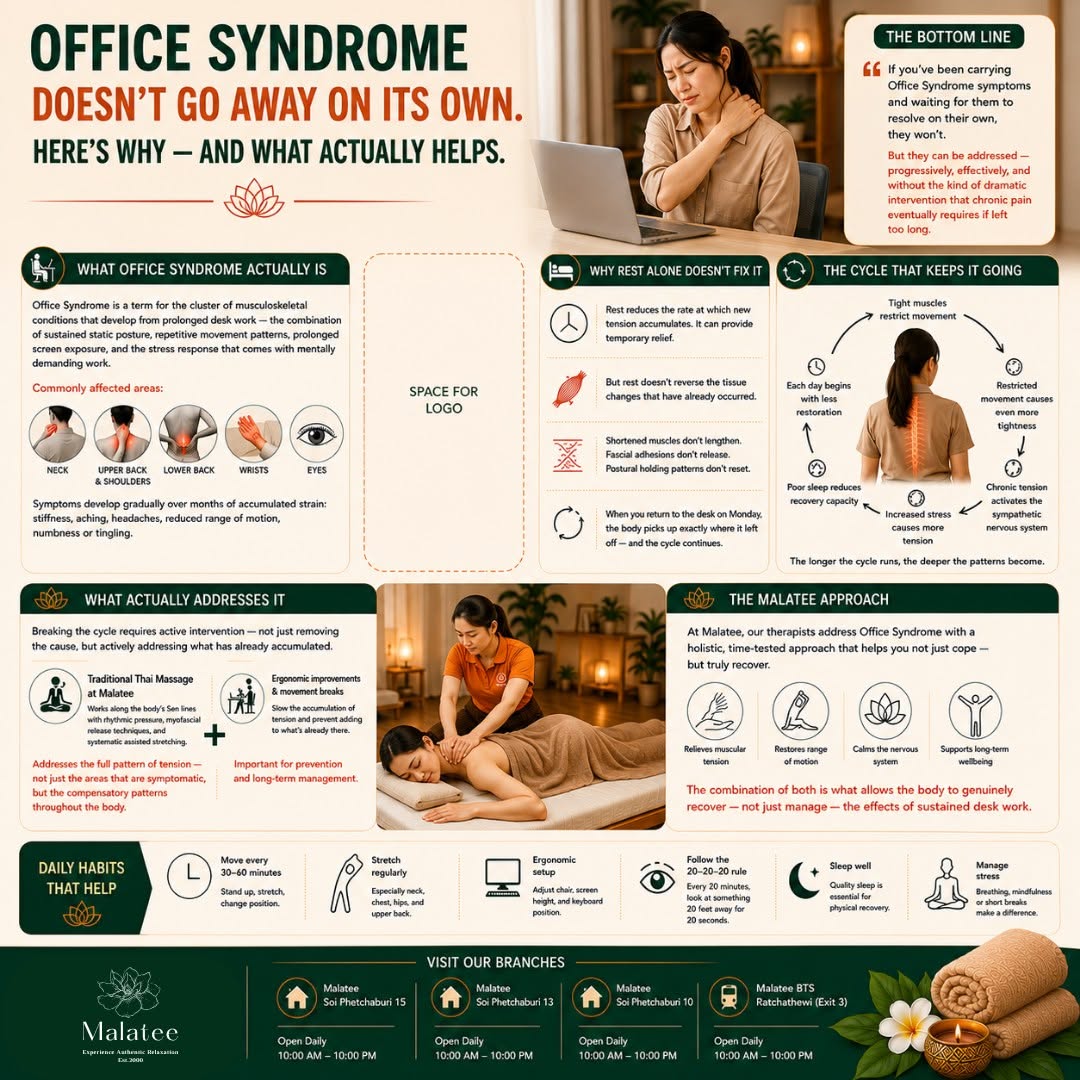
If you’ve been dealing with persistent neck stiffness, shoulder tension, upper back discomfort, or recurring headaches from working at a screen — and you’ve been hoping it will resolve if you just rest enough, sleep better, or take a few days off — there’s something important you should understand.
Office Syndrome doesn’t self-resolve. It compounds.
Here’s why.
**What Office Syndrome actually is**
Office Syndrome is a term for the cluster of musculoskeletal conditions that develop from prolonged desk work — the combination of sustained static posture, repetitive movement patterns, prolonged screen exposure, and the stress response that comes with mentally demanding work.
The most commonly affected areas are the neck, upper back and shoulders, lower back, wrists, and eyes. The symptoms — stiffness, aching, headaches, reduced range of motion, numbness or tingling — develop gradually over months of accumulated strain.
**Why rest alone doesn’t fix it**
This is the part most people don’t fully understand.
Rest reduces the rate at which new tension accumulates. If you stop sitting at a desk for two days, your neck and shoulders don’t receive the additional postural load they would on a working day. This can provide temporary relief — which is why a long weekend sometimes makes the body feel better.
But rest doesn’t reverse the tissue changes that have already occurred.
The muscle fibres that have shortened and stayed shortened don’t lengthen during rest. The fascial adhesions — areas where connective tissue has stuck together from sustained static load — don’t release spontaneously. The postural holding patterns that have been reinforced over months of the same position don’t reset simply because you’ve stopped adding to them.
When you return to the desk on Monday, the body picks up exactly where it left off — with the same shortened hip flexors, the same anterior shoulder tightness, the same suboccipital tension — and continues to add to what was already there.
Over months and years, this is how temporary discomfort becomes chronic pain.
**The cycle that keeps it going**
Office Syndrome has a self-reinforcing quality that makes it progressively harder to address the longer it’s left.
Tight muscles restrict movement. Restricted movement means the body avoids certain ranges of motion — which causes those areas to become even tighter and more restricted. Chronic muscular tension activates the sympathetic nervous system, which increases stress. Increased stress causes more muscular tension. Poor sleep — often a consequence of chronic physical tension — reduces the body’s capacity for overnight recovery, meaning each day begins with slightly less restoration than the day before.
The longer the cycle runs, the deeper the patterns become.
**What actually addresses it**
Breaking the cycle requires active intervention — not just removing the cause, but actively addressing what has already accumulated.
Traditional Thai Massage at Malatee is designed precisely for this. Working along the body’s Sen lines with rhythmic pressure, myofascial release techniques, and systematic assisted stretching, our therapists address the full pattern of tension that Office Syndrome creates — not just the areas that are symptomatic, but the compensatory patterns that have developed throughout the rest of the body in response.
Ergonomic improvements and movement breaks are important — they slow the accumulation. Regular massage addresses what accumulates regardless.
The combination of both is what allows the body to genuinely recover — not just manage — the effects of sustained desk work.
If you’ve been carrying Office Syndrome symptoms and waiting for them to resolve on their own, they won’t. But they can be addressed — progressively, effectively, and without the kind of dramatic intervention that chronic pain eventually requires if left too long.
 Walk-ins welcome at all Malatee branches.
 Office Syndrome ไม่หายเอง นี่คือเหตุผล — และสิ่งที่ช่วยได้จริงๆ
ถ้าคุณรับมือกับอาการคอแข็งเรื้อรัง ความตึงที่บ่า ความไม่สบายที่หลังส่วนบน หรืออาการปวดหัวซ้ำๆ จากการทำงานหน้าจอ — และคุณหวังว่ามันจะหายถ้าพักผ่อนเพียงพอ นอนหลับดีขึ้น หรือหยุดพักสักไม่กี่วัน — มีสิ่งสำคัญที่คุณควรเข้าใจ
Office Syndrome ไม่ฟื้นตัวเอง มันทบทวี
นี่คือเหตุผล
 Office Syndrome คืออะไรจริงๆ
Office Syndrome คือคำสำหรับกลุ่มอาการระบบกล้ามเนื้อและกระดูกที่พัฒนาขึ้นจากการทำงานที่โต๊ะเป็นเวลานาน — การผสมผสานของท่าทางนิ่งที่ยั่งยืน รูปแบบการเคลื่อนไหวซ้ำๆ การสัมผัสกับหน้าจอเป็นเวลานาน และการตอบสนองความเครียดที่มาพร้อมกับงานที่ต้องการสมาธิสูง
บริเวณที่ได้รับผลกระทบบ่อยที่สุดคือคอ หลังส่วนบนและบ่า หลังส่วนล่าง ข้อมือ และดวงตา อาการ — ความแข็ง ปวดเมื่อย ปวดหัว ช่วงการเคลื่อนไหวลดลง ชาหรือรู้สึกเสียว — พัฒนาขึ้นอย่างค่อยเป็นค่อยไปตลอดหลายเดือนของการสะสมความเครียด
ทำไมการพักผ่อนเพียงอย่างเดียวถึงไม่แก้ไขมัน
นี่คือส่วนที่คนส่วนใหญ่ไม่เข้าใจอย่างเต็มที่
การพักผ่อนลดอัตราที่ความตึงใหม่สะสม ถ้าคุณหยุดนั่งที่โต๊ะสองวัน คอและบ่าของคุณไม่ได้รับภาระท่าทางเพิ่มเติมที่จะได้รับในวันทำงาน สิ่งนี้สามารถให้ความโล่งใจชั่วคราว — นั่นคือเหตุผลที่สุดสัปดาห์ยาวบางครั้งทำให้ร่างกายรู้สึกดีขึ้น
แต่การพักผ่อนไม่ได้ย้อนกลับการเปลี่ยนแปลงของเนื้อเยื่อที่เกิดขึ้นไปแล้ว
เส้นใยกล้ามเนื้อที่สั้นลงและอยู่สั้นลงไม่ยาวขึ้นระหว่างการพักผ่อน การยึดติดของพังผืด — บริเวณที่เนื้อเยื่อเกี่ยวพันติดกันจากภาระนิ่งที่ยั่งยืน — ไม่ปล่อยออกเองตามธรรมชาติ รูปแบบการยึดท่าทางที่ถูกเสริมแรงตลอดหลายเดือนของตำแหน่งเดิม ไม่รีเซ็ตเพียงเพราะคุณหยุดเพิ่มให้กับพวกมัน
เมื่อคุณกลับมาที่โต๊ะในวันจันทร์ ร่างกายหยิบขึ้นมาจากจุดที่มันทิ้งไว้พอดี — กล้ามเนื้อสะโพกที่สั้นลงเหมือนเดิม ความตึงบ่าด้านหน้าเหมือนเดิม ความตึง Suboccipital เหมือนเดิม — และยังคงเพิ่มสิ่งที่มีอยู่แล้ว
ตลอดหลายเดือนและปี นี่คือวิธีที่ความไม่สบายชั่วคราวกลายเป็นความเจ็บปวดเรื้อรัง
วงจรที่ทำให้มันดำเนินต่อไป
Office Syndrome มีคุณสมบัติที่เสริมกำลังตัวเองซึ่งทำให้จัดการได้ยากขึ้นเรื่อยๆ ยิ่งทิ้งไว้นาน
กล้ามเนื้อที่ตึงจำกัดการเคลื่อนไหว การเคลื่อนไหวที่ถูกจำกัดหมายความว่าร่างกายหลีกเลี่ยงช่วงการเคลื่อนไหวบางอย่าง — ซึ่งทำให้บริเวณเหล่านั้นตึงและถูกจำกัดยิ่งขึ้นไปอีก ความตึงของกล้ามเนื้อเรื้อรังกระตุ้นระบบประสาทซิมพาเทติก ซึ่งเพิ่มความเครียด ความเครียดที่เพิ่มขึ้นทำให้กล้ามเนื้อตึงมากขึ้น การนอนหลับไม่ดี — มักเป็นผลจากความตึงทางกายเรื้อรัง — ลดความสามารถของร่างกายในการฟื้นฟูข้ามคืน หมายความว่าแต่ละวันเริ่มต้นด้วยการฟื้นฟูน้อยกว่าวันก่อนเล็กน้อย
ยิ่งวงจรดำเนินนานเท่าไหร่ รูปแบบก็ยิ่งลึกขึ้นเท่านั้น
สิ่งที่จัดการมันได้จริงๆ
การทำลายวงจรต้องการการแทรกแซงที่กระตือรือร้น — ไม่ใช่แค่การกำจัดสาเหตุ แต่การจัดการสิ่งที่สะสมไปแล้วอย่างกระตือรือร้น
การนวดแผนไทยที่มาลาตีออกแบบมาเพื่อสิ่งนี้โดยเฉพาะ การทำงานตามแนวเส้นสิบของร่างกายด้วยการกดจังหวะ เทคนิคการคลายพังผืด และการยืดแบบช่วยเหลืออย่างเป็นระบบ หมอนวดของเราจัดการรูปแบบความตึงทั้งหมดที่ Office Syndrome สร้าง — ไม่ใช่แค่บริเวณที่มีอาการ แต่รูปแบบการชดเชยที่พัฒนาขึ้นทั่วร่างกายที่เหลือเพื่อตอบสนอง
การปรับปรุง Ergonomic และการหยุดพักเพื่อเคลื่อนไหวมีความสำคัญ — พวกมันชะลอการสะสม การนวดสม่ำเสมอจัดการสิ่งที่สะสมไม่ว่าอย่างไร
การผสมผสานของทั้งสองอย่างคือสิ่งที่ทำให้ร่างกายฟื้นตัวได้จริงๆ — ไม่ใช่แค่จัดการ — ผลของการทำงานที่โต๊ะอย่างยั่งยืน
ถ้าคุณแบกอาการ Office Syndrome อยู่และรอให้มันหายเอง มันจะไม่หาย แต่มันสามารถได้รับการจัดการ — อย่างค่อยเป็นค่อยไป มีประสิทธิภาพ และโดยไม่ต้องการการแทรกแซงแบบที่ความเจ็บปวดเรื้อรังในที่สุดต้องการถ้าทิ้งไว้นานเกินไป
ไม่ต้องนัด Walk-in ยินดีต้อนรับทุกสาขา
办公室综合征不会自行消失。原因如下——以及真正有效的方法。
如果你长期与颈部僵硬、肩膀紧张、上背部不适或因长时间盯屏幕而反复出现的头痛打交道——而且你一直希望只要充分休息、睡得更好或请几天假就会好转——有一件重要的事你需要了解。
办公室综合征不会自行恢复,它会不断累积加重。
原因如下。
办公室综合征究竟是什么
办公室综合征是一组因长时间伏案工作而形成的肌肉骨骼问题的统称——持续的静态姿势、重复性动作模式、长时间面对屏幕,以及高强度脑力工作所带来的应激反应,共同造就了这一系列问题。
最常受影响的部位是颈部、上背部和肩膀、下背部、手腕和眼睛。症状——僵硬、酸痛、头痛、活动范围减小、麻木或刺痛——是在数月的持续劳损中逐渐发展起来的。
为什么单靠休息无法解决问题
这是大多数人没有完全理解的部分。
休息可以降低新紧张积累的速率。如果你停止伏案工作两天,颈部和肩膀就不会再承受工作日那样的额外姿势负荷。这可以带来暂时的缓解——这也是为什么一个长周末有时会让身体感觉好一些。
但休息无法逆转已经发生的组织变化。
已经缩短并保持缩短状态的肌纤维,在休息期间不会自动拉长。筋膜粘连——结缔组织因长期静态负荷而粘在一起的区域——不会自发松解。经过数月保持同一姿势而被强化的紧绷模式,不会仅仅因为你停止叠加就自动重置。
当你周一回到工作桌前,身体会从它停止的地方精确地继续——同样缩短的髋屈肌,同样紧绷的肩膀前侧,同样的枕下肌群紧张——并在已有基础上继续累积。
经过数月乃至数年,这正是暂时性不适演变为慢性疼痛的方式。
让它持续循环的机制
办公室综合征具有一种自我强化的特性,使其越拖延越难处理。
紧绷的肌肉限制活动范围。活动受限意味着身体会回避某些运动范围——这反过来使这些区域变得更紧绷、更受限。慢性肌肉紧张激活交感神经系统,压力随之增加。压力增加导致更多肌肉紧张。睡眠质量下降——通常是慢性体能紧张的后果——降低了身体夜间恢复的能力,意味着每天开始时的恢复程度都比前一天略少一些。
这个循环持续越久,模式就越根深蒂固。
真正能解决问题的方法
打破这个循环需要主动干预——不只是消除原因,而是主动处理已经积累的部分。
Malatee 的泰式传统按摩正是专为此而设计。通过沿Sen Lines经络进行有节奏的按压、筋膜松解技法和系统性辅助拉伸,我们的按摩师处理办公室综合征所形成的完整紧张模式——不只是有症状的部位,更包括全身其他部位为了代偿而形成的模式。
人体工学改善和定时活动休息很重要——它们能减缓积累的速度。定期按摩则处理无论如何都会积累的部分。
两者结合,才能让身体真正从长期伏案工作的影响中恢复——而不只是勉强应对。
如果你一直带着办公室综合征的症状,并等待它自行消失——它不会消失。但它可以被逐步、有效地处理,而不需要在拖延太久后慢性疼痛所要求的那种重大干预。
欢迎直接前往 Malatee 任意门店,无需预约。
 Experience Authentic Relaxation | Est. 2000
 Visit Our Branches:
• Malatee Soi Phetchaburi 15
• Malatee Soi Phetchaburi 13
• Malatee Soi Phetchaburi 10
• Malatee BTS Ratchathewi (Exit 3)
#MalateeThaiMassage#มาลาตีนวดไทย#OfficeSyndrome#ออฟฟิศซินโดรม#ThaiMassageBangkok#นวดแผนไทย#ChronicPain#WellnessBangkok#BangkokMassage#นวดเพื่อสุขภาพ#ถนนเพชรบุรี#DeskWorker#NeckPain#ShoulderPain
Lorem Ipsum is simply dummy text of the printing and typesetting industry